
Computerised car diagnostics
Warning lights on the dashboard, a car that does not run properly or a service interval to reset: all of them start from a computerised diagnosis. Most cars can be diagnosed at dealership level, with either a make-specific tester or an up-to-date multi-brand tester.
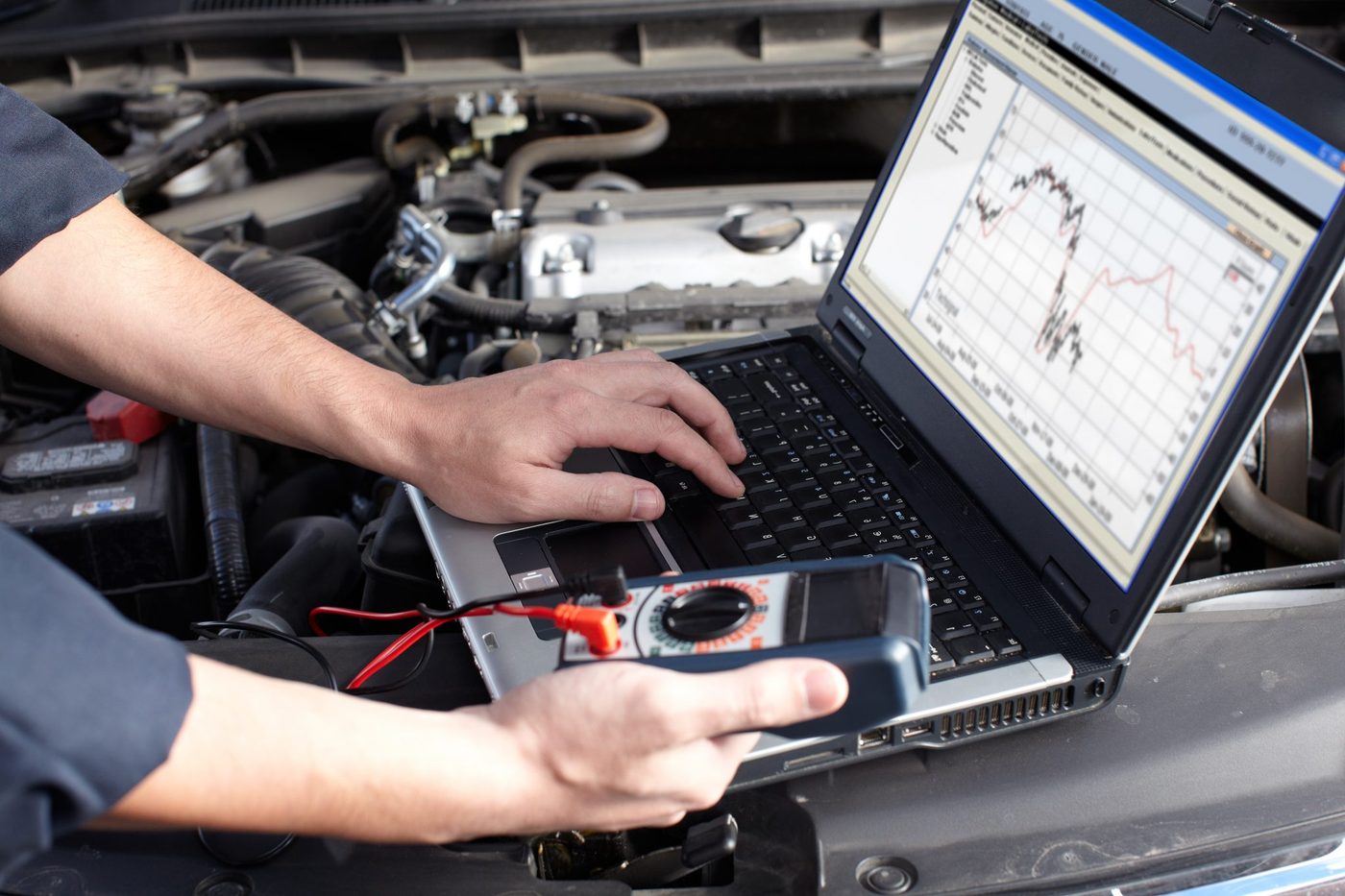
What can be done
- identifying and clearing DTC errors from the engine control unit and from the other modules in the car’s network, for most makes on the market, including electric vehicles (EV)
- re-adapting or resetting almost any module in a vehicle’s network
- resetting or programming the service interval, the brake pads and the inspection
- updating modules with specific software and activating some functions (coding)
The modules in a car’s network
A modern car is a network of computers. It includes the ECU (PCM, ECM) for the engine, the TCU/TCM for the transmission, ABS, airbag, air conditioning, the instrument panel, multimedia, comfort, gateway, headlights, battery management, the parking brake and more. Each of them can be identified, updated, checked for errors, cleared of errors or re-adapted after replacement.
What is worth knowing
- Clearing an error code works when the error is not permanent. An error that comes back has a real cause, and fixing it is a separate job, not just a diagnosis.
- On new-generation cars, updating or replacing modules usually needs the dealership tester and an online connection to the manufacturer’s server.
For the functions that can be activated after a diagnosis, see BMW feature activation and coding and VAG feature activation and coding.